
30 September 2026
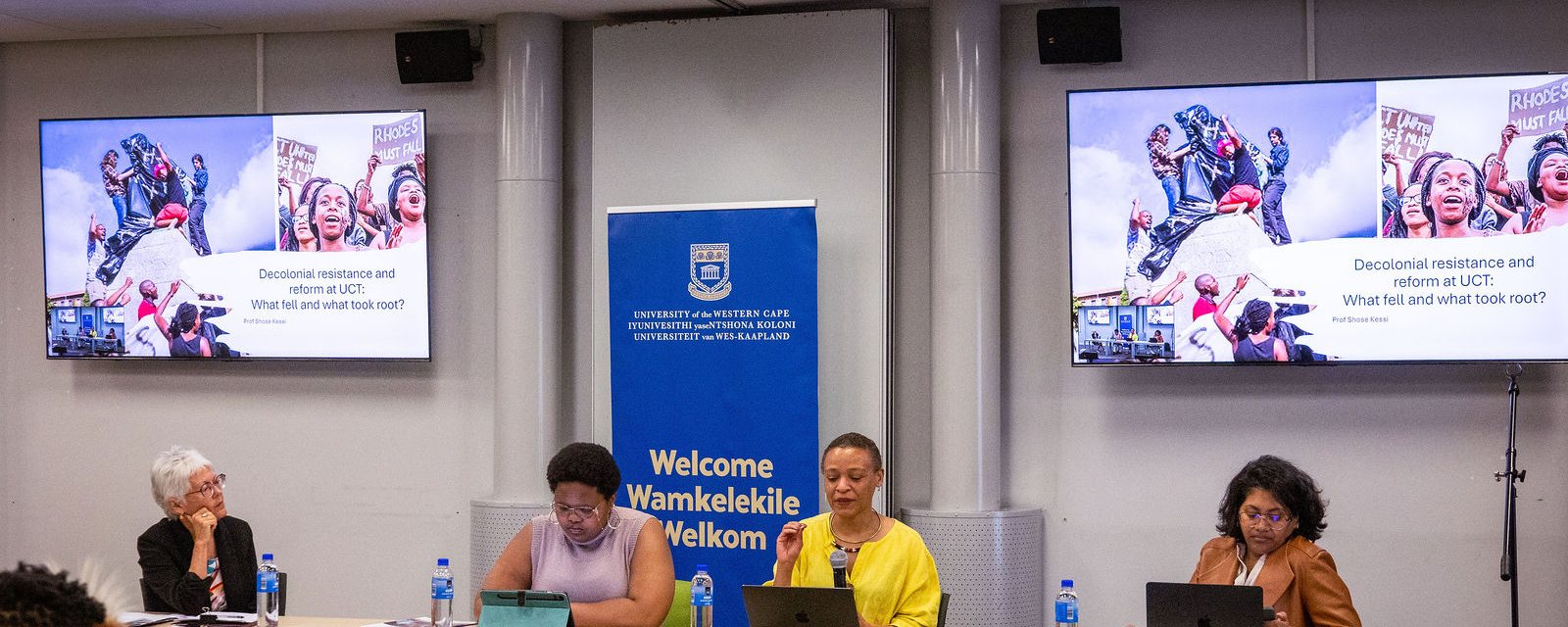
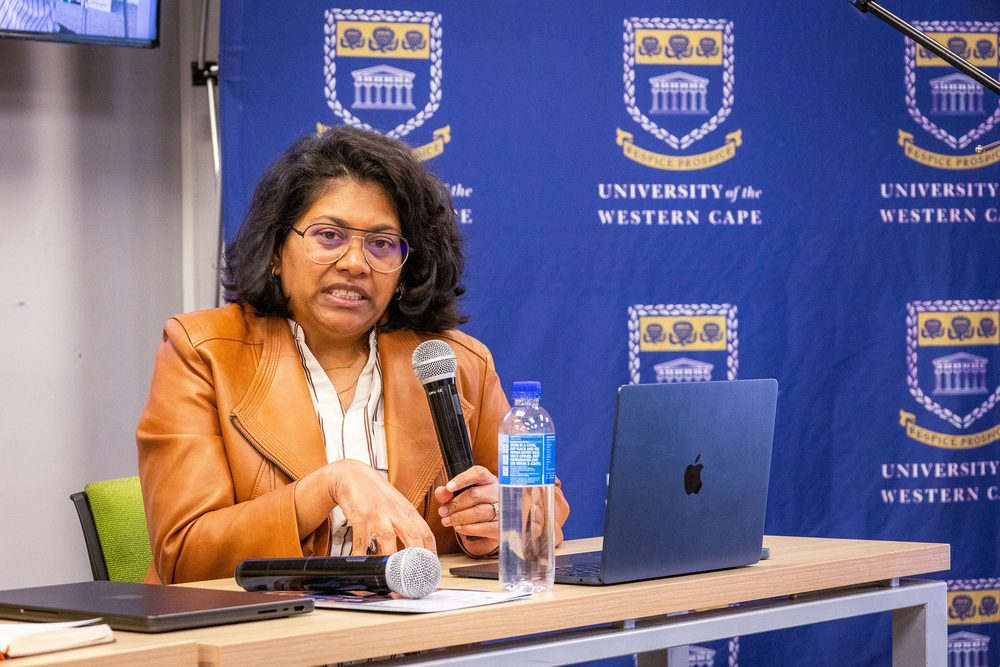
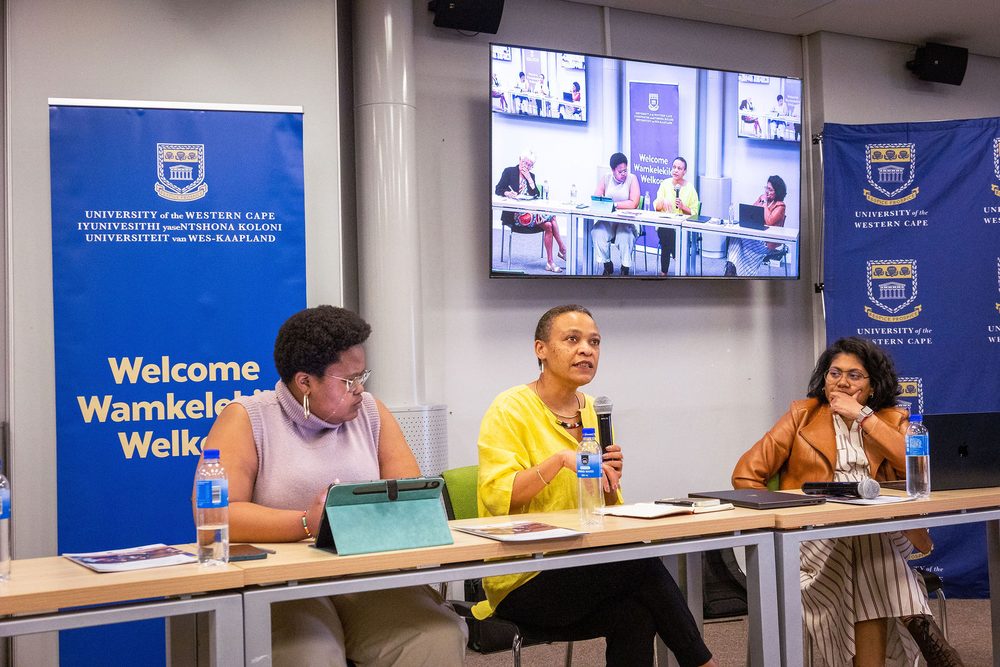
On 30 September 2026 the Cape Higher Education Consortium (CHEC) and the University of the Western Cape hosted Building Inclusive Learning Ecosystems for Universities, the first seminar in a new CHEC series. It was convened under the theme What Fell? What Took Root? University, Community and Transformation Ten Years After #Fallist.
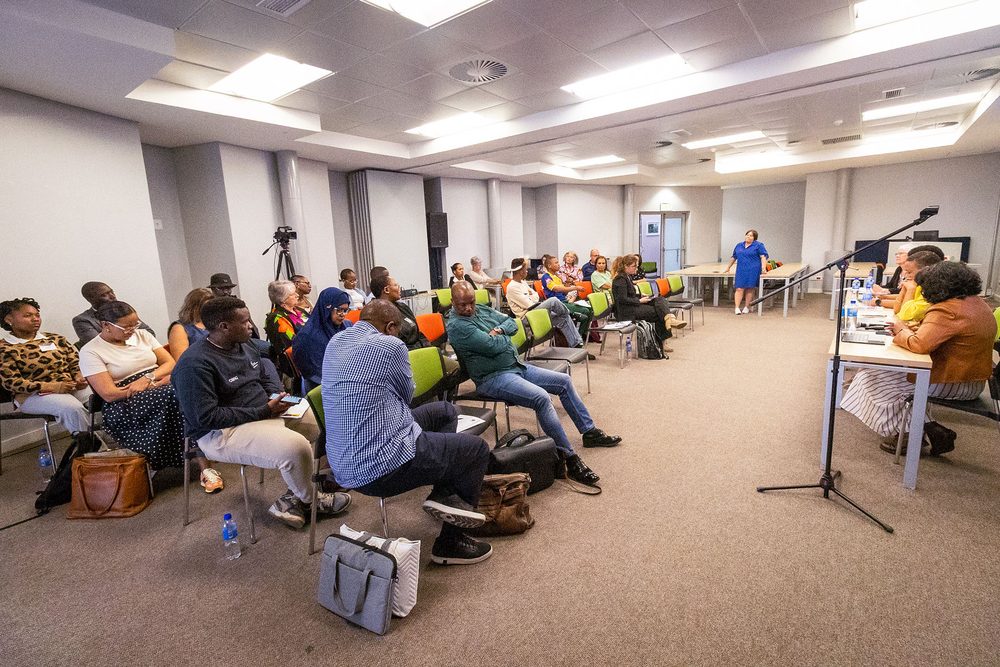
Held as a hybrid seminar at UWC's Prof Brian O'Connell Life Sciences Building, the morning brought staff and students together to reflect on the state of transformation in South African higher education a decade after the 2015 and 2016 #RhodesMustFall and #FeesMustFall movements — and to consider what has changed, what has endured, and what needs to be prioritised going forward.
Event at a Glance
Date: 30 September 2026 | Time: 09:00–12:30
Venue: Prof Brian O'Connell Life Sciences Building, UWC Campus | Format: Hybrid (In-person & Online)
Hosted by: CHEC and the University of the Western Cape
Setting the scene
Dr Sharman Wickham of CHEC opened proceedings by recalling CHEC's purpose since the signing of the Compact for Regional Cooperation in 2002: to promote equity in the higher education institutions of the Western Cape, to respond to developments in the knowledge economy, and to establish the province as a strong learning region. All of CHEC's projects involve collaboration and partnership, and many contribute to transformation efforts across the four public universities.
The new series builds on CHEC's earlier seminars on decoloniality funded by the Mellon Foundation, and on the priorities identified at the HE on Trial summit convened earlier this year with the Western Cape Government. Those priorities include epistemic and linguistic justice, and curriculum transformation that prepares graduates for a changing world and a changing world of work.
Because this first seminar fell a decade after the #Fallist movements, it was an appropriate moment to look back at what has shifted since — and to ask the question that framed the day: What fell? What took root?
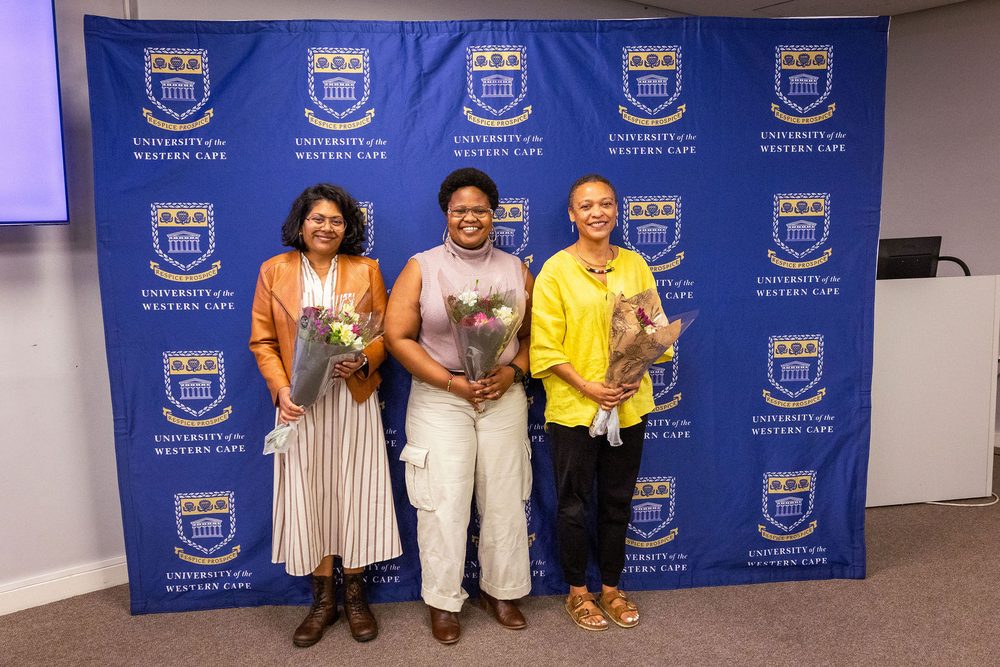
Three perspectives
Prof Shose Kessi — Dean of Humanities, University of Cape Town
Prof Kessi has served on a range of transformation structures since arriving at UCT in 2011, including the Special Executive Task Team in 2016, and went on to found the UCT Black Academic Caucus. She was well placed to trace the shifts in staff and student demographics, and in institutional structures and culture.
Recalling the 2016 #Shackville protests that brought institutional racism at the university into sharp focus, she pointed to newer institutional frameworks that speak not only to student access but to student success. UCT approved an updated language policy with an implementation strategy in 2024, recognising the value of multilingualism and progressively integrating isiXhosa into academic life alongside English. She also highlighted the renaming of Jameson Memorial Hall after Sarah Baartman — a deeply symbolic act that serves as a reminder of the violence of colonialism, the silencing of indigenous voices, and the denial of humanity, and as a call to confront injustice with honesty and courage.
Ms Simiso Langa — Stellenbosch University
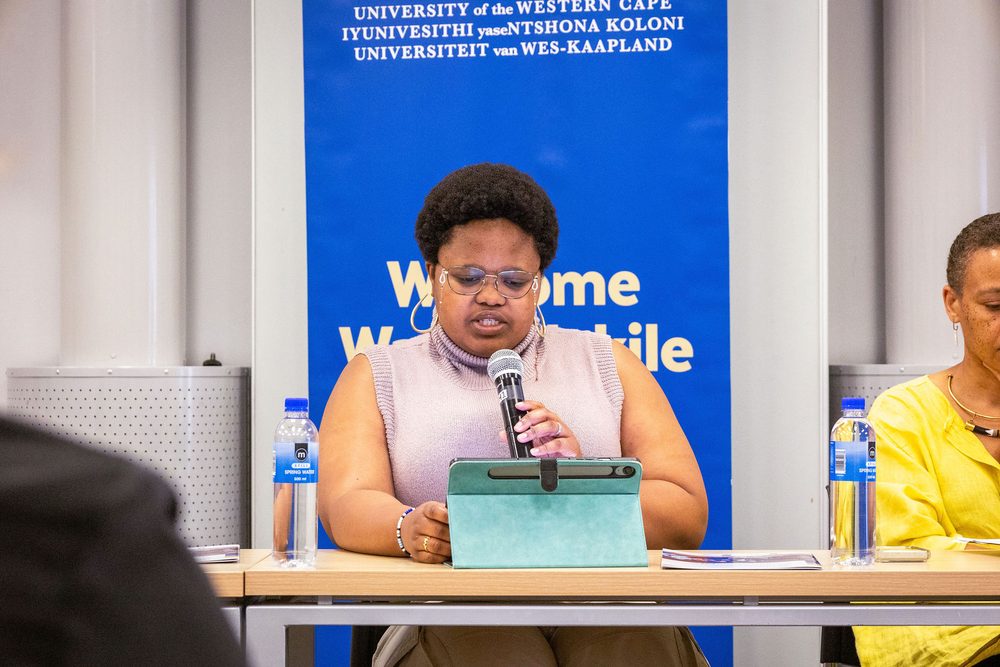
A student perspective came from Ms Langa, Interim President of Stellenbosch University's Student Representative Council in 2025–2026 and a Master's student in Plant Pathology. She traced a decade of developments at the university, beginning with the Restitution Statement of 2018, in which Stellenbosch acknowledged its contribution to the injustices of the past and apologised unreservedly. The Open Stellenbosch Movement, a student- and staff-led collective, had been established to challenge institutional racism, Afrikaans linguistic hegemony, exclusion, and the slow pace of transformation.
Questions of institutional culture have since been addressed through the university's request for an independent inquiry — the Khampepe Report — and through its institutional response to the recommendations. Those recommendations reach into curriculum transformation, the co-curriculum, student communities both residential and commuter, and the alignment of transformation structures. Identity and belonging are also addressed through the new language policy. In this way, she said, restitution is becoming personal.
Dr Davinia Jithoo — Cape Peninsula University of Technology
Dr Jithoo, Director for Strategic Initiatives and Partnerships at CPUT, brought an internationalisation lens to the questions posed to the panel, opening with one of her own: "Who do you choose to build knowledge with?" She spoke to the importance of "plural thinking" and "transformative learning" in developing social consciousness, social justice and social cohesion, highlighting the value of cognitive transformation and drawing attention to a publishing infrastructure in which accredited journals favour the global North.
Drawing on her PhD study of the structural dynamics of intra-African collaborative research teams, and her current work as co-chair of the UNESCO Chair on Intercultural Competences, she distinguished between the material barriers to internationalisation and what she termed "habits of mind" — arguing that internationalisation need not "depend on a flight". She is currently a key participant in AFRICOIL, the African-led academic network connecting virtual student exchanges and cross-border educational programmes.
The discussion
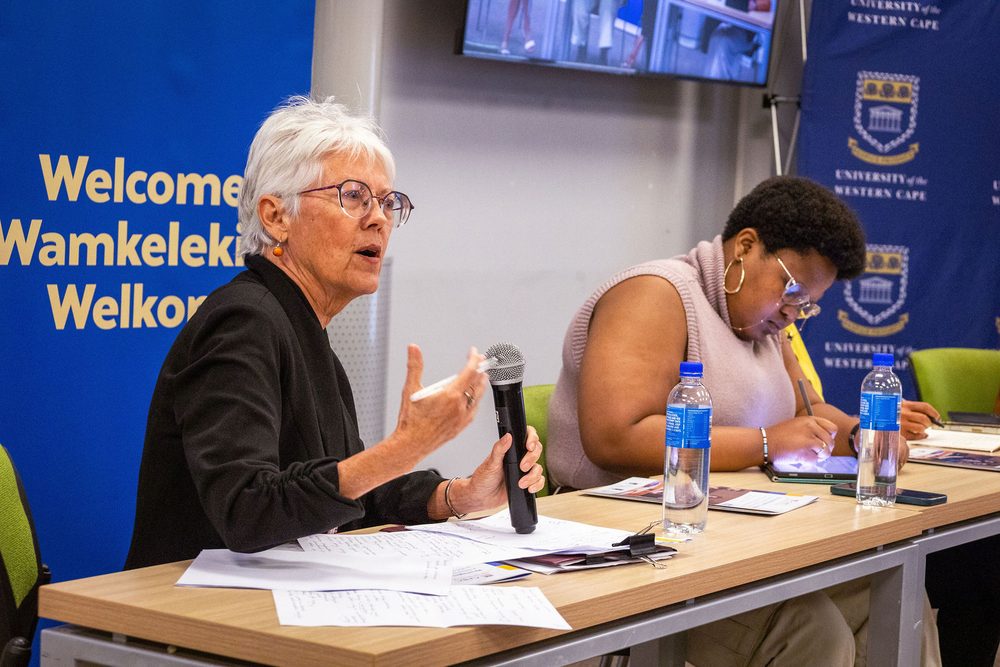
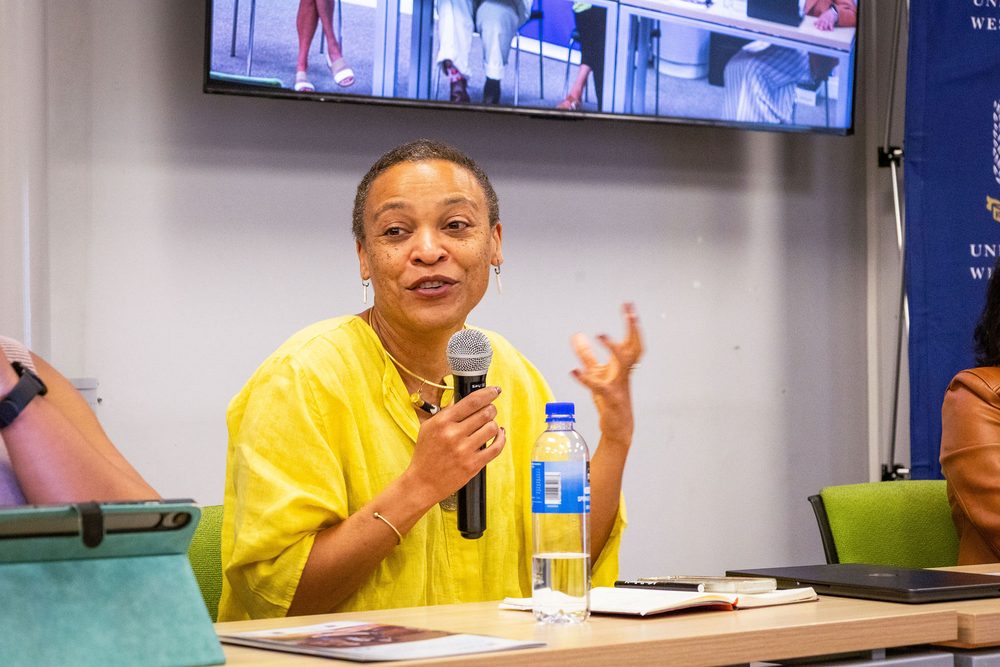
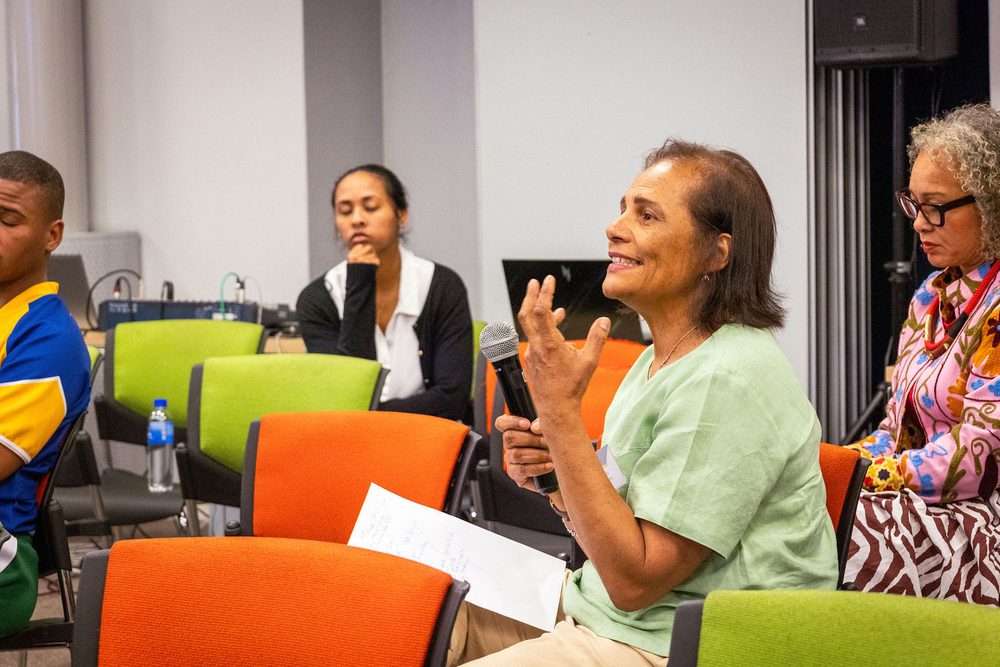
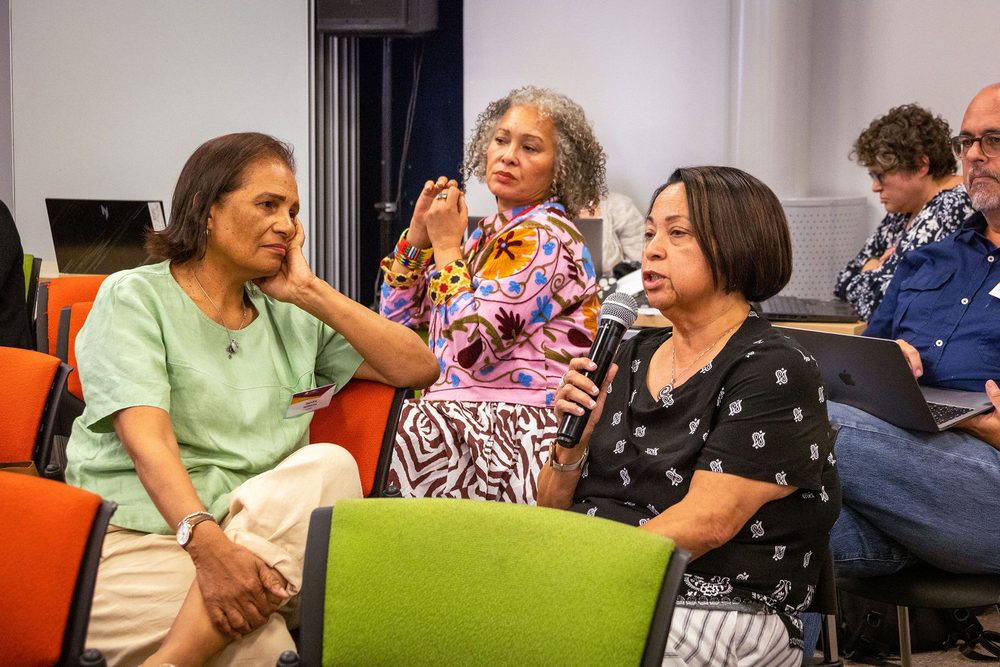
Several themes ran through the discussion that followed.
Participants drew a distinction between a university in Africa and a university for Africa, linking this to the measures currently used to assess quality in outputs and outcomes, and to the rankings built on them. It was suggested that the criteria used in ranking processes be unpacked further at subsequent seminars and roundtables.
Power was a second major theme — relational power in particular, as it plays out at individual, institutional and national levels. Until we recognise how power operates at each level, it was argued, until it is "made visible", it will be difficult to move beyond being a transforming university to a transformed one. Here too, participants asked for the definitions themselves to be explored further.
While the value of new and updated language policies was acknowledged, along with symbols of transformation such as the renaming of buildings and visual redress initiatives, it was also suggested that much of what has been achieved may amount to "window dressing" or "performative transformation" — partly because new policies are difficult to implement in practical terms. One comment drew attention to the role of regulatory bodies in instilling a compliance culture rather than a transformative one.
Work on student access and success was raised as an ongoing transformation issue. Access is not only about acceptance and enrolment; it is about ensuring that all students can take up the opportunities that shape their journey to becoming graduates, including their part in shaping institutional culture and policy. Questions followed about funding provision and resource allocation, with NSFAS described as "a poverty grant" that inhibits full engagement in what the university has to offer.
Participants recognised that "unlearning" is required in the transformation process, alongside greater consciousness among educators — from primary and secondary school teachers through to all post-school educators — and, very importantly, political will among university leaders and managers. One comment noted the limitations faced by academics without a background in the philosophy of knowledge or education, for whom the language of transformation can be experienced as intimidating and exclusionary, producing fear and anxiety that present further challenges.
The "silos within which we work", "complex hierarchies" and the "stagnant middle ground" found in universities were named as additional barriers, illustrating that structural violence goes hand in hand with epistemic violence — and raising the question of how universities might broaden the decision-base and its processes to ensure inclusive decision-making.
Looking forward
Underlying both the presentations and the discussion are various, often implicit, theories of change operating at national, institutional and individual levels. Making these explicit could help to build a fuller explanation of what has changed and why, and what has taken root and why, over the past decade. Transformation has many dimensions, and these need to be accounted for when examining the theories of change themselves and when setting strategies for future work. It was also acknowledged that compromises have been made over the last decade — and that these may have been necessary along the way.
The seminar concluded that transformation cannot be "just a top-down process" of new structures, policies and committees. It needs to be directly informed by what happens on the ground, to and with students themselves.
In closing, Dr Wickham invited participants to submit proposals to CHEC for small grant funding on the topics raised at the seminar, or on those explored in the CHEC publication Reimagining Higher Education: a deep dive into Decoloniality in the four CHEC Universities. She thanked the University of the Western Cape and its staff for hosting the event. Information on the next seminar in the series will be communicated early in 2027.
In pictures
Photography: Koala Media.
Small Grant Funding
CHEC invites proposals for small grant funding on the topics raised at this seminar, and on those explored in Reimagining Higher Education: a deep dive into Decoloniality in the four CHEC Universities. Details of the next seminar in the Building Inclusive Learning Ecosystems series will be communicated early in 2027.