
9 November 2026
9 November 2026 | STIAS, Stellenbosch | In person Convened through the CHEC Higher Education Leadership Academy with Management Center Innsbruck and collaborating partners
The Cape Higher Education Consortium brought higher education, business, government and intermediary organisations together at the Stellenbosch Institute for Advanced Study to explore how university–industry collaboration can strengthen graduate capabilities and respond to real organisational and societal challenges. Building on the priorities identified at the HE on Trial summit earlier in the year, the workshop connected system reform, project-based learning, international collaboration and practical ecosystem design within a single programme.
Prof René Pellissier framed the challenge of transforming higher education through the metaphor of "teaching the elephant to dance" — enabling a large, complex and heavily regulated university system to become more agile, responsive and socially relevant. Her presentation linked these challenges to the SADC Higher Education Strategy and put forward the idea of a "university of universities", through which institutions could share projects, facilities, expertise and learning opportunities, supporting credit transfer and more flexible pathways incorporating badges and micro-credentials.
David Rupertsberger's contribution, introduced by Dr Lester Sigauke, addressed graduate work readiness through university–SME collaboration, setting out a five-phase model: define an achievable SME challenge, match students, deliver with joint mentoring, evaluate learning and business value, and improve the model before scaling.
Prof Dr Gerhard Hillmer presented project-based learning, the Hillmer and Stahl skills development model and Collaborative Online International Learning (COIL) as complementary approaches to preparing graduates for changing careers, drawing on an initiative that brought European and South African students together in small online teams. Dr Lester Sigauke linked education innovation to the urgency of strengthening Africa–Europe partnerships and creating opportunities within African economies.
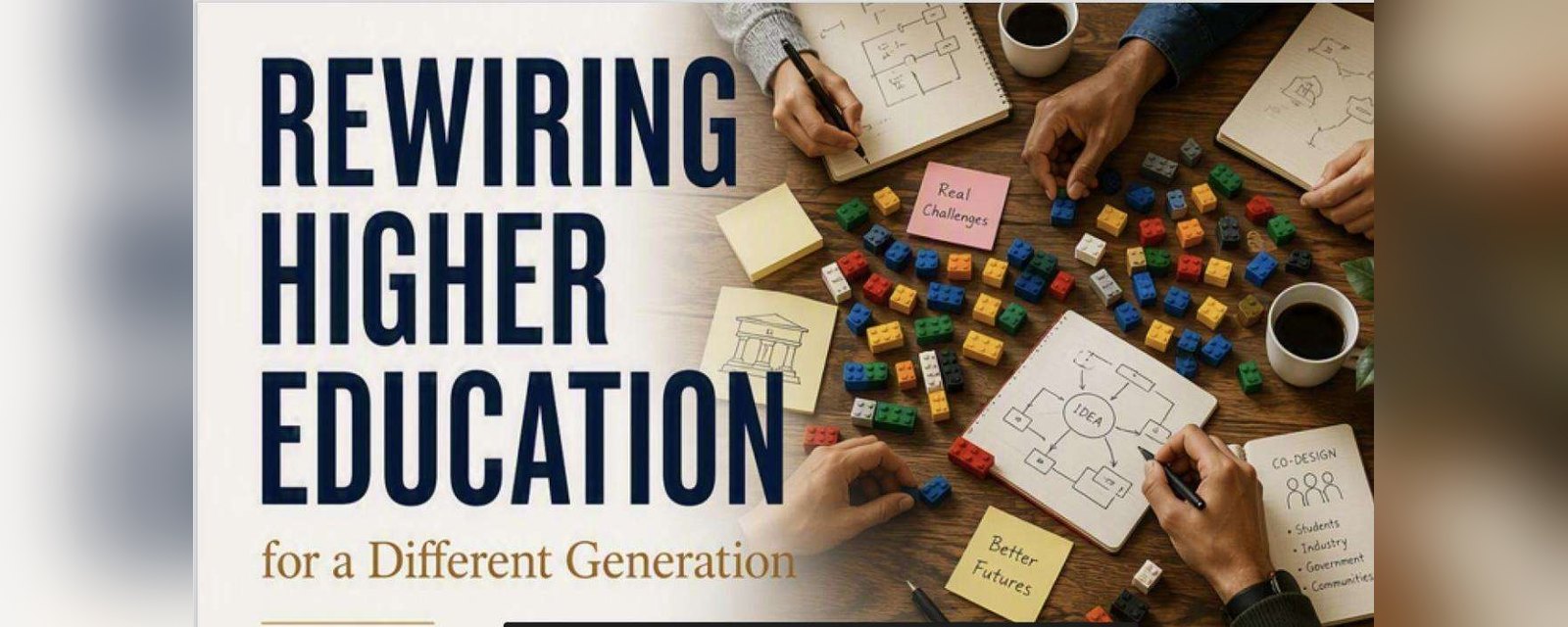
Designing ecosystems through LEGO Serious Play
The afternoon activity, led by Gareth Stead of Xpand SA Consulting, translated the discussion into tangible models. Participants used bricks, figures, labels and connections to represent the elements of a higher education ecosystem, producing five group models that made relationships, resources and priorities visible — and that explored how different actors and functions relate, rather than treating graduate development as the responsibility of a single institution.
Groups evaluated their proposed programmes against six criteria: industry relevance, innovation, interdisciplinarity, scalability, SDG alignment and potential impact.
Event at a Glance
Date: 9 November 2026 | Format: In person
Venue: Stellenbosch Institute for Advanced Study (STIAS)
Convened by: CHEC Higher Education Leadership Academy with Management Center Innsbruck
Event Report
The full report records the presentations and discussion, the group ecosystem models and the evaluation framework, and sets out the recommended follow-up — confirming the capstone arrangements, developing stakeholder-informed capstones, selecting a manageable joint pilot, resolving academic and coordination requirements, and measuring learning and partner value.
What happens next
The workshop continues into a capstone, From Insight to Intervention, scheduled for January 2027. Participants identify a meaningful challenge in their own higher education–industry context, develop a practical response with relevant stakeholders, and present it alongside a written capstone report. Successful completion carries a joint certificate from the Cape Higher Education Consortium and Management Center Innsbruck. This report will be updated once the capstone has taken place.